Mass Casualty Incidents: Triage and Marking of the Wounded
Share
During large-scale accidents, fires, explosions, or military conflicts, the number of casualties can rapidly exceed available responder and medical resources. In such situations, the standard principle of "helping the first person you reach" does not work and can cost additional lives. To save as many people as possible, a victim sorting technique called triage (French triage – sorting) is applied.
Essence and Objective of Triage
Triage is the targeted sorting of casualties into groups according to the severity of their injuries and the urgency of emergency care needed. The primary goal of triage is to provide the maximum possible help to the largest number of casualties by using limited resources and time efficiently.
At the scene of a mass casualty incident, the first arriving rescuer or medic does not perform lengthy treatment. Their task is to evaluate each victim's condition within 30–60 seconds, perform only critical life-saving interventions (stop massive bleeding, open airways), assign a triage category, and move on to the next person. Before starting work, it is essential to assess environmental safety and ensure emergency services (112 in Lithuania / local emergency number) have been notified.
The START Triage System
One of the most widely used systems globally and in civil defense is START (Simple Triage and Rapid Treatment). It is based on checking four physiological parameters: ability to walk, respiration, circulation, and mental status.
Steps of the START algorithm:
- Walking casualties: The rescuer shouts loudly: "Everyone who can walk and hear me, come to me (or go to a designated safe area)". All persons able to walk independently are automatically assigned to the minor injury category.
-
Assessment of respiration: For those unable to walk, respiration is evaluated:
- If not breathing – open the airway. If they still do not start breathing – assign to the deceased category. If breathing resumes – assign to the immediate care category.
- If the respiratory rate is greater than 30 breaths per minute – assign to the immediate care category.
- Assessment of circulation: If the respiratory rate is up to 30 breaths per minute, check radial pulse at the wrist or capillary refill time (after pressing a fingernail, pink color must return in less than 2 seconds). If pulse is absent or refill time exceeds 2 seconds – assign to the immediate care category. Massive hemorrhage control is also performed.
- Assessment of mental status: If circulation is satisfactory, check whether the person follows simple commands (e.g., "squeeze my hand"). If unable to follow commands – immediate care. If able to follow commands – delayed care.
Triage Categories and Colors
Along with the assessment, each victim is marked with a corresponding color so that other rescuers and transport teams can immediately see the priority order:
- Red (Priority I – Immediate): Life-threatening injuries that can be managed with available means (e.g., open pneumothorax, controlled massive bleeding, airway obstruction). These patients are evacuated and treated first.
- Yellow (Priority II – Delayed): Severe injuries (e.g., closed limb fractures, large wounds without active massive bleeding) that do not pose an immediate threat to life at this moment. Care for them can be briefly delayed.
- Green (Priority III – Minimal): Walking wounded with minor abrasions, sprains, or small wounds. Care is provided in the final stage.
- Black (Priority 0 – Expectant / Deceased): Individuals with no signs of breathing after opening the airway, or with injuries incompatible with life.
Marking Tools and Equipment
Special tools that must be moisture-resistant and clearly visible are used for casualty marking. A specialized Smart Triage set is used for this purpose – it includes a SMART Sieve rapid triage card, MIST cards, and a pouch, making the kit suitable for working with START or SMART Sieve methodologies.
A black permanent marker is used to write critical information on the victim's skin, tourniquet, or special cards. A casualty card is filled out to monitor the victim's condition. Tools are convenient to carry when using a paramedic backpack (30L) or an IFAK pouch.
Comparison of Triage Categories
| Category / Color | Priority | Example Injuries | Evacuation Order |
|---|---|---|---|
| Red | I (Immediate) | Massive bleeding, airway compromise, tension pneumothorax | 1st priority (immediate) |
| Yellow | II (Delayed) | Femur / lower leg fractures, large wounds, stable burns | 2nd priority (after red) |
| Green | III (Minimal) | Minor cuts, sprains, psychological shock | 3rd priority (last) |
| Black | 0 (Deceased) | Not breathing even after opening airway; injuries incompatible with life | According to arriving emergency services instructions |
Practical Cheat Sheet: Actions at a Mass Casualty Scene
If you find yourself at a mass casualty incident scene, follow these principles:
- Safety and emergency call: Ensure the scene is safe. Call 112 (or local emergency number) and report the mass casualty incident, providing the estimated number of injured.
- Separate walking casualties: Loudly instruct the mildly injured to move to a safe zone (green category).
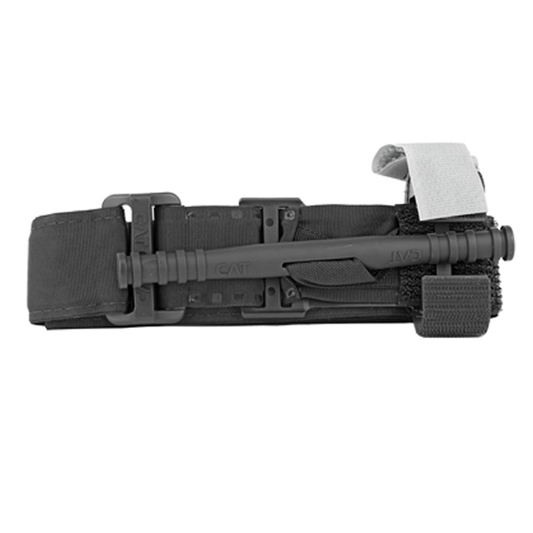
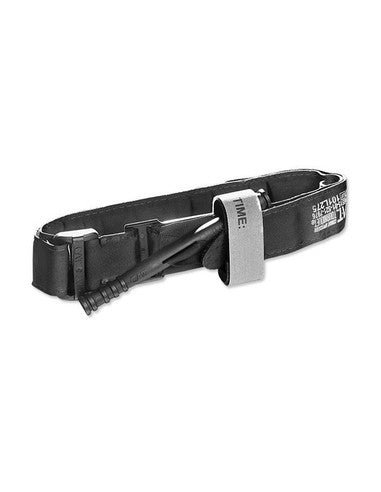
- Rapid assessment: Move through the remaining casualties using the START algorithm. Do not waste time on detailed bandaging – perform ONLY life-saving procedures (apply a tourniquet, place in recovery position, or apply an occlusive chest seal). You can find necessary knowledge about hemorrhage control in the article on hemorrhage control.
- Marking: Mark each victim with a colored band or card in a visible spot (on the wrist or ankle).
- Reporting: Pass information on the count of red and yellow patients to arriving medical units. For storing and transporting equipment, it is convenient to use kits described in the guide on IFAK kit assembly.
Want to learn how to perform this in practice? We organize tactical medicine training – for more information contact mokymai@parakomanai.lt.
Didn't find the equipment you need? Write to parduotuve@parakomanai.lt – we will help.
Sources
- NAEMT: naemt.org
- Deployed Medicine (TCCC Guidelines): deployedmedicine.com
- Fire and Rescue Department of Lithuania: pagd.lrv.lt
- Emergency Response Centre (Lithuania): 112.lt