Hypothermia and Trauma: Why Warmth Saves Lives
Share
A drop in body temperature following trauma is one of the most critical conditions directly affecting survival rates. Blood loss and tissue damage impair the body's ability to produce and retain heat. Timely thermal management is an indispensable part of first aid that must be addressed immediately after controlling life-threatening bleeding.
What Is Traumatic Hypothermia and Why Is It Dangerous?
In medicine, hypothermia is defined as a condition where core body temperature falls below 35 °C. In the presence of traumatic shock and blood loss, hypothermia develops much faster and more aggressively than under normal circumstances. Post-trauma cooling can occur during any season—even on a warm summer day—if the casualty is lying on cold ground, concrete, or is wet.
A body experiencing blood loss produces less heat. As blood volume drops, microcirculation deteriorates and tissues receive less oxygen. Consequently, body temperature plummets rapidly, exerting a severe negative impact on vital organ function. When encountering a victim showing signs of severe trauma, call 112 immediately (the Lithuanian emergency number) and begin hypothermia prevention measures without delay.
The Trauma Lethal Triad: Hypothermia, Acidosis, and Coagulopathy
In trauma care and critical medicine, a dangerous triad of interrelated conditions is known as the trauma lethal triad. These three factors reinforce one another, creating a vicious cycle that becomes exceedingly difficult to break in later stages.
The lethal triad consists of the following elements:
- Hypothermia: A drop in core body temperature that slows all physiological and chemical reactions.
- Coagulopathy: Impaired blood clotting. The proteins and enzymes of the coagulation cascade are optimized to function at normal body temperature. As the body cools, clotting reactions slow down or cease entirely, causing bleeding to resume or intensify even from minor wounds.
- Acidosis: An increase in blood acidity. When tissues lack oxygen, cells switch to anaerobic metabolism, producing lactic acid, which further depresses cardiovascular performance.
Because cooled blood clots poorly, the casualty loses more blood, accelerating heat loss even further. This is why preserving body warmth is directly linked to effective hemorrhage control.
Mechanisms of Heat Loss Following Trauma
To protect a casualty effectively, it is essential to understand how the body loses heat to the environment:
- Conduction: Direct transfer of heat through contact with a colder surface. Lying on cold ground, asphalt, snow, or metal stretchers rapidly drains heat from the body.
- Radiation: Natural heat loss emitted into the environment as infrared radiation. This is a primary pathway for heat loss in open spaces.
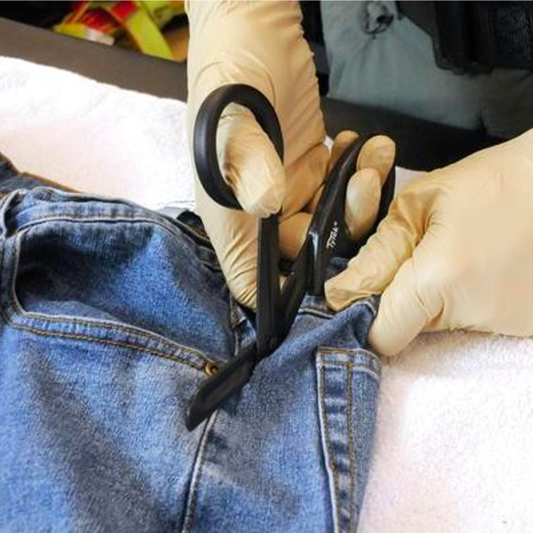
- Convection: The cooling effect of wind or moving air. Even a slight breeze strips the layer of warm air from the skin, especially if clothing was unbuttoned or cut open during wound assessment.
- Evaporation: Thermal loss via liquid evaporation. Wet clothing caused by blood, sweat, rain, or standing water significantly accelerates hypothermia.
Hypothermia Prevention Gear and Selection
First aid kits utilize passive hypothermia prevention equipment to block further heat dissipation into the surroundings. Depending on the scenario and available equipment, various types of thermal wraps can be applied.
The simplest option is a standard thin first aid thermal insulation blanket, which creates a physical wind barrier and reflects radiant body heat. A larger green/silver thermal blanket for first aid kits (160 x 210 cm) is also available, offering a camouflaged green side for tactical environments.
In tactical medicine and severe trauma cases, thicker multi-layer blankets are used. For example, the Blizzard Trauma Blanket or the more compact Blizzard IFAK blanket retain heat far better than standard thin foil sheets. During public events and outdoors, a tent-style First Aid Pod casualty shelter—which includes a first aid blanket—protects casualties from wind, rain, and onlookers.
Comparison of Heat Preservation Products
| Product | Intended Use | Key Considerations |
|---|---|---|
| Foil Thermal Blanket | Rapid wrapping to retain heat and block wind | Thin and fragile; ground insulation under the patient is still required |
| Blizzard Blanket | Extended cold weather protection in severe trauma cases | Thicker than foil, yet compact enough to fit inside medical kits |
| First Aid Pod Shelter | Protection against wind, rain, and crowds in public places | Functions as a shelter tent, not a blanket—use together with a blanket for heat retention |
Practical Checklist: Casualty Warming Steps
To effectively protect a injured person from hypothermia, follow this sequence of actions:
- Insulate from the Ground: The single most critical step is placing insulation underneath the casualty's body. Use a sleeping pad, backpack, clothing, or a litter. Simply covering the top of the body will not suffice if direct contact with cold ground remains.
- Remove or Isolate Wet Clothing: If environmental conditions permit, remove wet garments. If removal is impractical, cover wet layers with a waterproof barrier.
- Wrap Tightly: Enclose the casualty from head to toe. Tuck the edges of the thermal blanket underneath the body to keep wind from blowing cold air inside.
- Cover the Head: Significant heat loss occurs through an exposed head. Cover the head with a beanie, hood, or the edge of the thermal wrap, leaving only the airway uncovered.
- Monitor Vital Signs: Continuously monitor breathing and level of consciousness. Hypothermia management should follow the priority structure outlined in our guide on the MARCH algorithm. Additionally, make sure all necessary supplies are stocked in your individual first aid kit (IFAK).
Want to learn these skills hands-on? We organize tactical medicine training courses—find out more at mokymai@parakomanai.lt.
Couldn't find the medical device you need? Email us at parduotuve@parakomanai.lt—we are here to help.
Sources
- Deployed Medicine (TCCC Guidelines): deployedmedicine.com
- European Resuscitation Council (ERC): erc.edu
- LT72 (Lithuanian Emergency Preparedness Portal): lt72.lt
- Emergency Response Centre (Lithuania): 112.lt