Casualty Card: What to Write Down and Why It Matters to Medics
Share
In a critical situation when providing first aid to a casualty, the actions performed are only half the job. It is equally important to accurately record what procedures were carried out and what condition the victim was observed to be in. In tactical and evacuation medicine, a standardized casualty card is used for this purpose, accompanying the casualty through all stages of evacuation.
Why Is Medical Documentation Critically Important?
When a casualty is handed over to higher-echelon medical personnel or an evacuation team, the responder often cannot personally detail the entire course of events. Under stressful conditions, verbal handover can be inaccurate or part of the data may simply be forgotten.
A casualty card solves this problem. It ensures continuity of care. For example, a hospital surgeon needs to know how many hours a tourniquet has been applied to a limb, whether the casualty experienced respiratory distress, and what medications or dressings were used. Failing to record the tourniquet application time in a timely manner can lead to an incorrect decision regarding its removal and cause severe complications. In the event of any trauma, remember to call professional emergency assistance via 112 as soon as possible.
What Is a Casualty Card and Where Is It Kept?
The casualty card we offer comes in A5 format, made of synthetic fiber that is resistant to water, grease, and tearing, ensuring that entries do not rub off even when wet. Armies use similar cards, such as the TCCC card.
Attach the filled-out card in a visible spot on the casualty's clothing (for example, clipped to a chest pocket or pinned to a jacket). Never place the card inside inner pockets or deep inside a backpack where medics might miss it. The card is also an important component of an IFAK kit.
What Must Be Recorded on a Casualty Card?
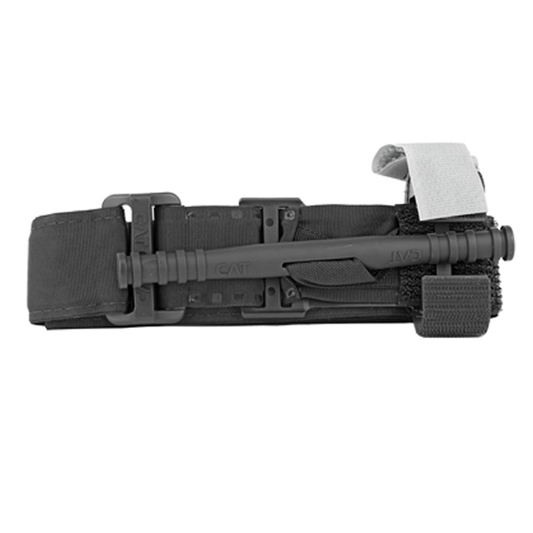
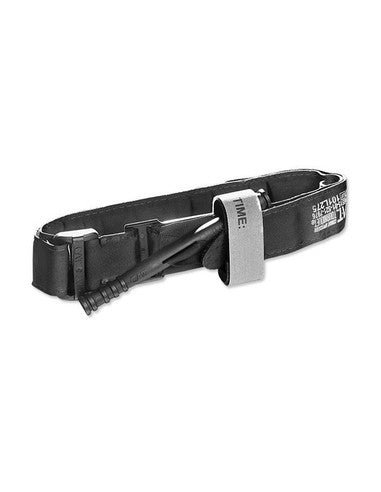
The card should be filled out sequentially using a bold writing tool. A black permanent marker is ideal for this. If a card is unavailable, the most critical data should be written directly on the casualty's skin (e.g., forehead) or on the strap of the applied tourniquet.
Key fields and data on a casualty card:
- Identification: Casualty's full name, date of birth, or identification number (if known). Affiliation should also be specified (civilian, military).
- Event Date and Time: Exact time of injury and the time the card was filled out.
- Mechanism of Injury: Note the cause of injury (gunshot wound, explosion, stab wound, burn, motor vehicle accident).
- Wound Location: Clearly mark injury locations (entry/exit wounds, fractures, burns) on the body diagram provided on the card.
-
Interventions Performed According to MARCH:
- M (Massive Bleeding): Tourniquet application site and EXACT time (hours and minutes). Note whether wound packing was performed.
- A (Airway): Note interventions performed (nasopharyngeal airway, recovery position).
- R (Respiration): Chest seal application.
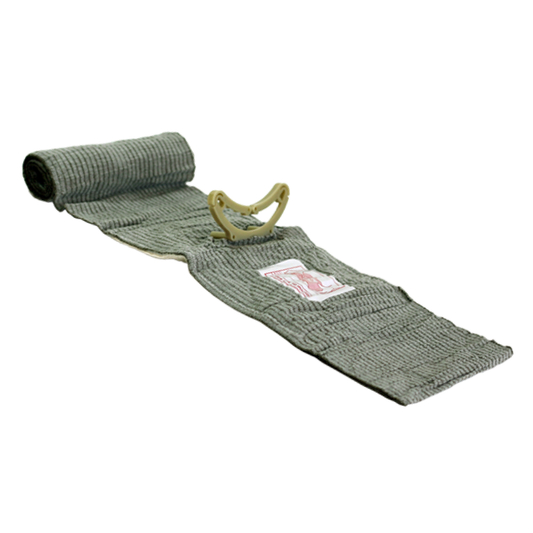
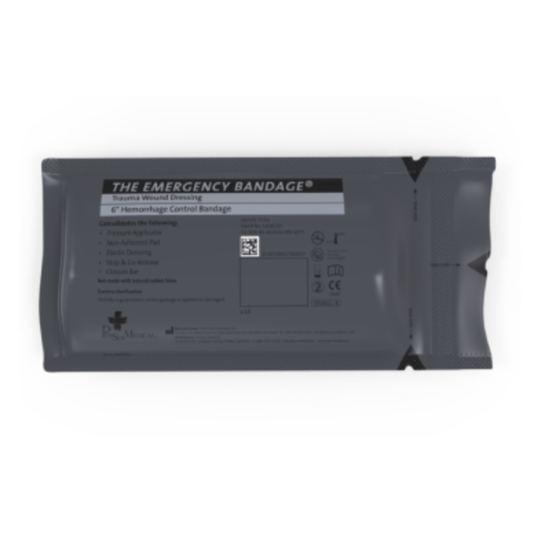
- C (Circulation): Pressure dressings applied, splints.
- H (Hypothermia): Thermal blanket application.
- Responder Details: Name or call sign of the person providing care.
Comparison of Documentation Requirements
| Field / Data | Critical Importance | Where to write if no card is available? | Most Common Error |
|---|---|---|---|
| Tourniquet application time | Highest | Directly on the tourniquet strap or forehead (e.g., T 14:30) | Recording only the hour without minutes |
| Wound location on body diagram | High | On the skin near the wound or on a general note | Unnoticed exit wounds on the back area |
| Types of dressings and airways | Medium / High | Next to the corresponding body part | Not specifying whether a chest seal has a valve |
| Blood type (if known) | Medium | On the skin or a visible patch | Relying on unverified verbal information |
Practical Checklist: How to Fill Out and Hand Over the Card
Follow these steps when providing aid and filling out documentation:
- Care first, write second: Perform all life-saving actions according to the MARCH algorithm first. The card is filled out only after lethal threats are controlled.
- Use a reliable marker: Write only with a permanent marker. A standard ballpoint pen often fails to write on wet or bloody surfaces.
- Record time immediately: Once a tourniquet is applied, note the time right away. Unrecorded time requires extra attention from medical personnel. You can review key features of tourniquets in our guide on choosing a tourniquet.
- Attach in a visible spot: Use a lanyard or pin to secure the card to the casualty's chest.
- Verbal report (MIST): When transferring the casualty to the arriving medical team, summarize with a quick verbal report: Mechanism of injury, Injuries found, Vital signs, Treatment given.
Want to learn how to perform this hands-on? We organize tactical medicine training – for more information contact mokymai@parakomanai.lt.
Didn't find the item you need? Write to parduotuve@parakomanai.lt – we'll help you out.
Sources
- Deployed Medicine (TCCC Guidelines): deployedmedicine.com
- NAEMT: naemt.org
- Lithuanian Red Cross: redcross.lt
- General Emergency Center (Lithuania Emergency Number 112): 112.lt