Paramedic Backpack: How to Set It Up
Share
A medical backpack is the primary work tool of a paramedic or combat lifesaver, holding the gear needed to provide care to multiple casualties. Unlike an individual first aid kit, a paramedic backpack must accommodate an expanded volume of medical inventory. Proper gear layout inside the pack ensures that under stress and time constraints, the required tool is found within seconds.
Purpose and Ergonomics of a Paramedic Backpack
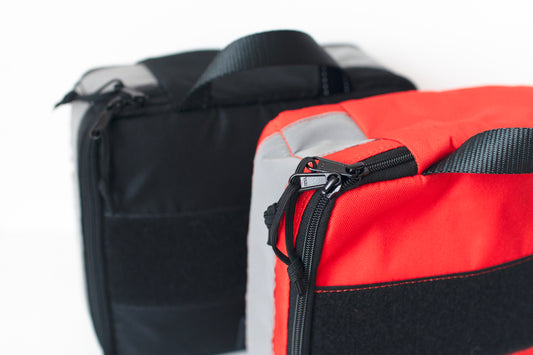
The main requirement for a medical backpack is a clear organization system and rapid access to its contents. The backpack should not be just a deep bag with supplies dumped together in a heap. It must feature detachable compartments, flaps, or transparent pockets.
Depending on the mission duration and expected casualty count, the backpack capacity is selected accordingly. For daily work or short-duration operations, a more compact paramedic backpack (21L) or a bright pink Barbie paramedic bag (21L) is typically used. If preparing for extended deployments or operating in mass casualty zones, a larger capacity paramedic backpack (30L) is applied.
We demonstrate what a 30-liter backpack looks like with six removable pouches in our video review.
Layout of Contents According to MARCH Priority Principles
The most effective way to pack a backpack is arranging gear according to care priorities. All actions are planned following the MARCH algorithm, so the backpack compartments must align with this flow.
Arrangement of gear by sections:
- External Pockets (Massive Bleeding): The most quickly accessible location (top of the backpack or outer pockets). Tourniquets, hemostatic dressings, and pressure dressings are placed here. At a critical moment, the backpack does not even need to be fully unzipped.
- Airway and Chest Section (Airway & Respiration): Nasopharyngeal airways, lubricants, and occlusive chest seals are kept in the internal flap or a dedicated pouch. Read more about using these tools in our description on chest seals.
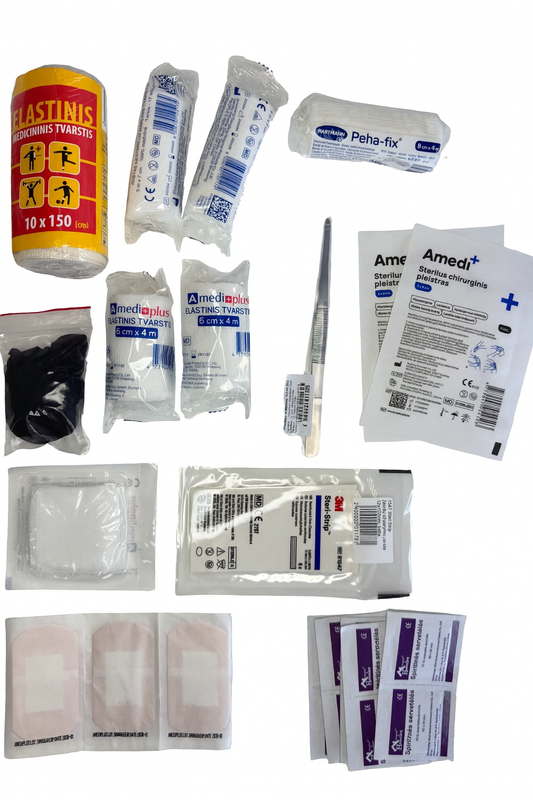
- Circulation and Immobilization Section (Circulation): Additional elastic bandages, SAM splints, and pelvic splints.
- Hypothermia and Protection Section (Hypothermia): Thermal blankets, wraps, and heating elements are kept at the bottom of the pack or in a separate bag.
Modular Pouches and Small Item Organization
Small medical supplies, such as ampoules, gloves, shears, or tapes, must have dedicated secure places. This protects them from damage during transport.
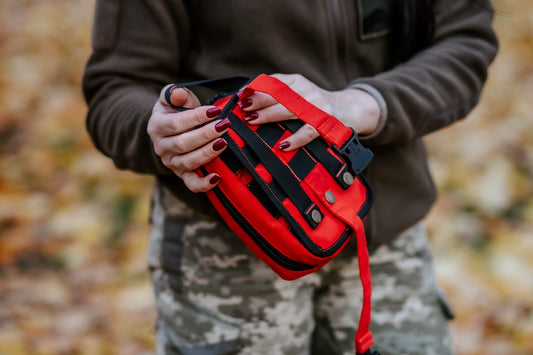
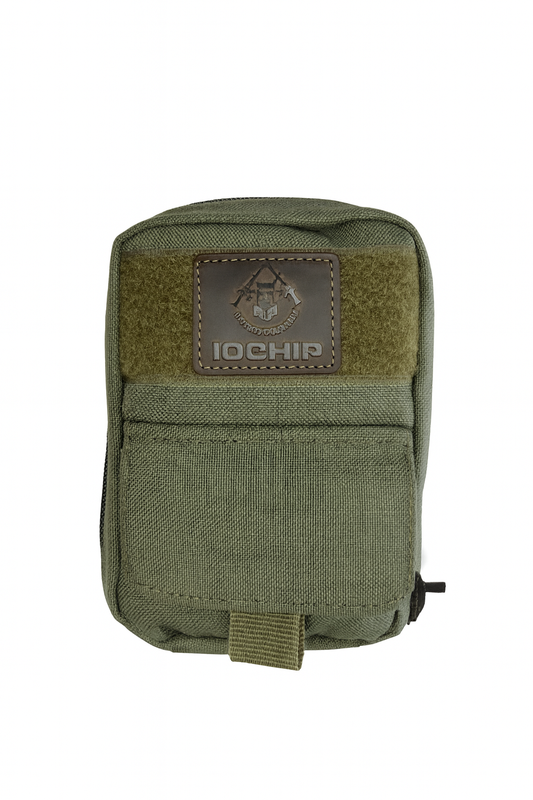
To store medications, a specialized ampoule pouch with hard plastic walls or a standard ampoule pouch is used. Hard walls prevent glass ampoules from shattering if the backpack is dropped or compressed. For safety and hygiene, a medical glove pouch is mounted on the external part of the backpack, allowing protective gloves to be donned before opening the main compartment.
For novice rescuers or units seeking a ready-to-use solution, a fully equipped paramedic/combat lifesaver backpack with pre-arranged gear is a suitable choice.
Backpack Section and Gear Layout Table
| Section / Location | Priority (MARCH) | Gear | When Required |
|---|---|---|---|
| External pockets / Top | M (Massive Bleeding) | Tourniquets, hemostatic and pressure dressings, shears | First seconds |
| Upper internal flap | A & R (Airway, Respiration) | Nasopharyngeal airways, chest seals | Immediately after stopping bleeding |
| Main compartment | C (Circulation) | Elastic bandages, SAM splints, pelvic splint | After managing life-threatening conditions |
| Bottom / Lower pouch | H (Hypothermia, Head) | Thermal blankets, head bandages, casualty cards | Once the situation is stabilized |
| Separate hard cases | Specific care | Ampoules, diagnostic equipment (for medical staff) | As needed |
Practical Checklist: Backpack Care and Maintenance
Follow these tips when managing a paramedic backpack:
- Color Coding: Use modular pouches of different colors (e.g., red for bleeding, blue for airway, yellow for immobilization). This enables team members to hand over the required pouch without lengthy explanations.
- Continuous Restocking: Immediately restock used items after every deployment or training exercise. An empty package in the pack creates a false sense of security.
- Expiration Date Checks: Check the expiration dates of hemostatic dressings, chest seals, and medications once every 6 months. A compromised vacuum seal renders the item non-sterile.
- Alignment with Personal IFAK: Paramedic backpack contents should complement, not replace, individual first aid kits. Read about what belongs in a personal kit in our guide on IFAK setup.
Want to learn how to do this in practice? We organize tactical medicine training – for more information contact mokymai@parakomanai.lt.
Didn't find the gear you need? Drop us a line at parduotuve@parakomanai.lt – we'll help you out.
Sources
- Deployed Medicine (TCCC Guidelines): deployedmedicine.com
- NAEMT: naemt.org
- European Resuscitation Council (ERC): erc.edu
- General Emergency Response Centre of Lithuania: 112.lt