First Aid Hiking, Hunting, and Shooting Range Guide
Share
Outdoor activities, long hikes, hunting, or training at the shooting range carry increased injury risks and limited accessibility to emergency medical services. When far from the city, the arrival of medical personnel can take several hours. For this reason, the responsibility for preserving a victim's life falls upon the participants themselves.
Specific Outdoor and Shooting Range Risks
Different activity environments generate distinct injury mechanisms. In hiking, limb sprains, fractures, abrasions, campfire burns, and hypothermia are most common. Hunting and shooting range environments carry risks of severe trauma: gunshot wounds, deep lacerations from improper handling of firearms or knives, and shrapnel injuries.
In any case, if an incident occurs, the first action is ensuring safety and determining location. At the shooting range, a cease-fire command is declared immediately. During a hunt, all firearms must be unloaded. Only after securing safety should you call 112 (or local emergency services) and provide exact coordinates before initiating aid.
Gunshot and Laceration Wounds: Bleeding Control
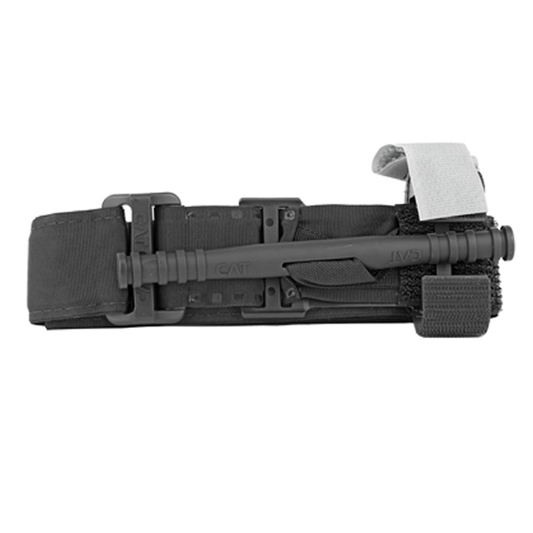
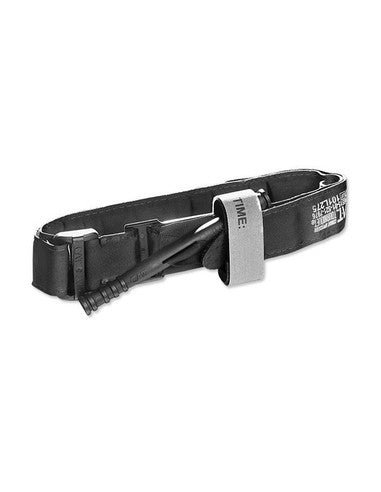
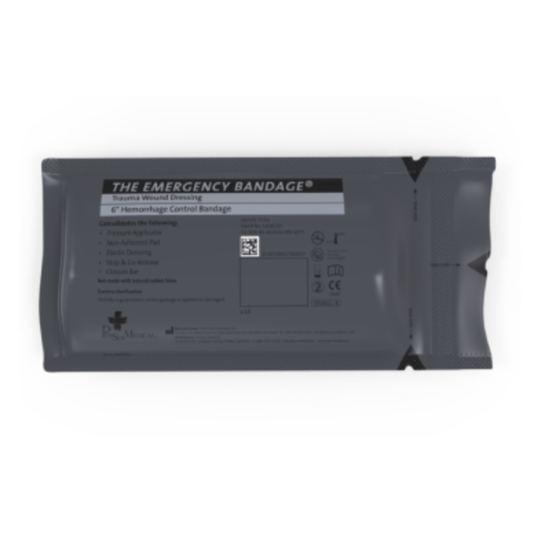
Gunshot trauma at the range or during a hunt requires instantaneous response. When massive arterial bleeding occurs on extremities, apply a CAT gen 7 tourniquet. It is placed high on the limb or above the wound and tightened until bleeding stops completely. If the limb is thin or aid is being rendered to a canine, an alternative can be the SWAT-T™ tourniquet.
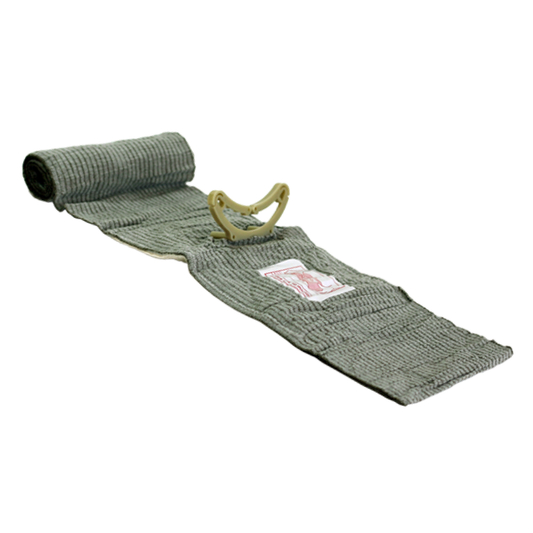
To treat wounds in junctional areas (axilla, groin), wound packing is performed. Here, QuikClot Combat Gauze hemostatic dressing is used, as its active agents help form a blood clot faster. To seal chest gunshot injuries, it is vital to carry a pack containing Foxseal occlusive chest seals (2 pcs).
Hiking Traumas: Fractures, Sprains, and Hypothermia
Trekking across uneven terrain frequently causes ankle or knee sprains and bone fractures. Immobilization is applied to stabilize the limb and reduce pain. A SAM splint is used for this, as it can be easily shaped to the limb's anatomy and secured with a bandage.
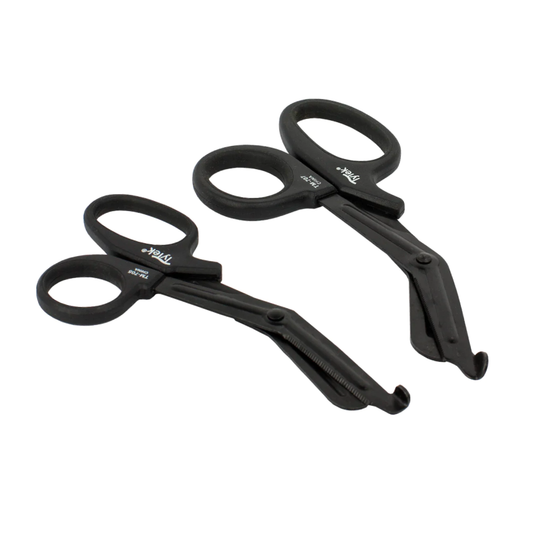
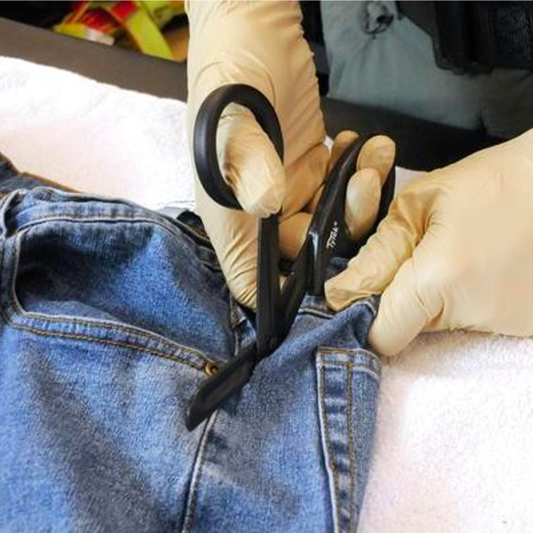
Prolonged outdoor exposure, especially in rain or low temperatures, creates a hypothermia risk. A victim who has suffered blood loss or is unable to move due to trauma rapidly loses body heat. A green-silver thermal emergency blanket (160 x 210 cm) is used for protection. Additionally, durable black tactical trauma shears "Piranha" (large) are used to cut open clothing and bandages.
Gear and Medical Kit Preparation for Activities
The medical kit must be organized so that it can be reached without removing your entire backpack or load-bearing gear. Before setting off on a hike or to the range, all group members must be familiarized with the placement of medical supplies. To learn how to correctly arrange equipment on clothing or belts, read our guide on where to carry a tourniquet and IFAK.
At the shooting range and during hunting, all actions must strictly follow established priority steps. The order of care is detailed in the article on the MARCH algorithm and its application.
Comparison of Medical Supplies for Outdoor and Range Use
| Supply | Purpose in Hiking | Purpose at Range / Hunting | Priority |
|---|---|---|---|
| CAT / SWAT-T Tourniquet | Deep lacerations (knife, axe) | Gunshot arterial bleeding from limbs | Highest (M) |
| QuikClot Hemostatic Gauze | Bleeding where tourniquet cannot be placed | Gunshot wounds in junctional areas | Highest (M) |
| Foxseal Occlusive Chest Seal | Rare puncture chest wounds | Gunshot / shrapnel chest injuries | High (R) |
| SAM Splint | Ankle, shin, wrist immobilization | Fractures from falls or impact | Medium (C/H) |
| Thermal Emergency Blanket | Protection against hypothermia while awaiting help | Shock and hypothermia prevention after blood loss | High (H) |
Practical Checklist: Actions During Outdoor Emergencies
When faced with a critical situation far from urban areas, follow this procedure:
- Ensure Safety: Cease fire, unload weapons, move to a safe location away from the threat source.
- Communication & Coordinates: Call 112 (or local emergency line). Provide GPS coordinates or exact landmarks, as an ambulance may not be able to drive directly to you.
- Massive Hemorrhage Control: If severe bleeding is present, apply a tourniquet or pack the wound with hemostatic gauze.
- Environmental Protection: Place the victim on an insulating pad and wrap them in a thermal blanket. A person lying directly on the ground loses heat rapidly.
- Group Management: Assign one individual to meet incoming rescuers or paramedics at the nearest accessible road.
Want to learn how to do this in practice? We organize tactical medicine training—more information at mokymai@parakomanai.lt.
Didn't find the tool you need? Write to parduotuve@parakomanai.lt—we will help.
Sources
- Deployed Medicine (TCCC Guidelines): deployedmedicine.com
- Stop the Bleed: stopthebleed.org
- Lithuanian Red Cross: redcross.lt
- General Emergency Centre (Lithuania): 112.lt